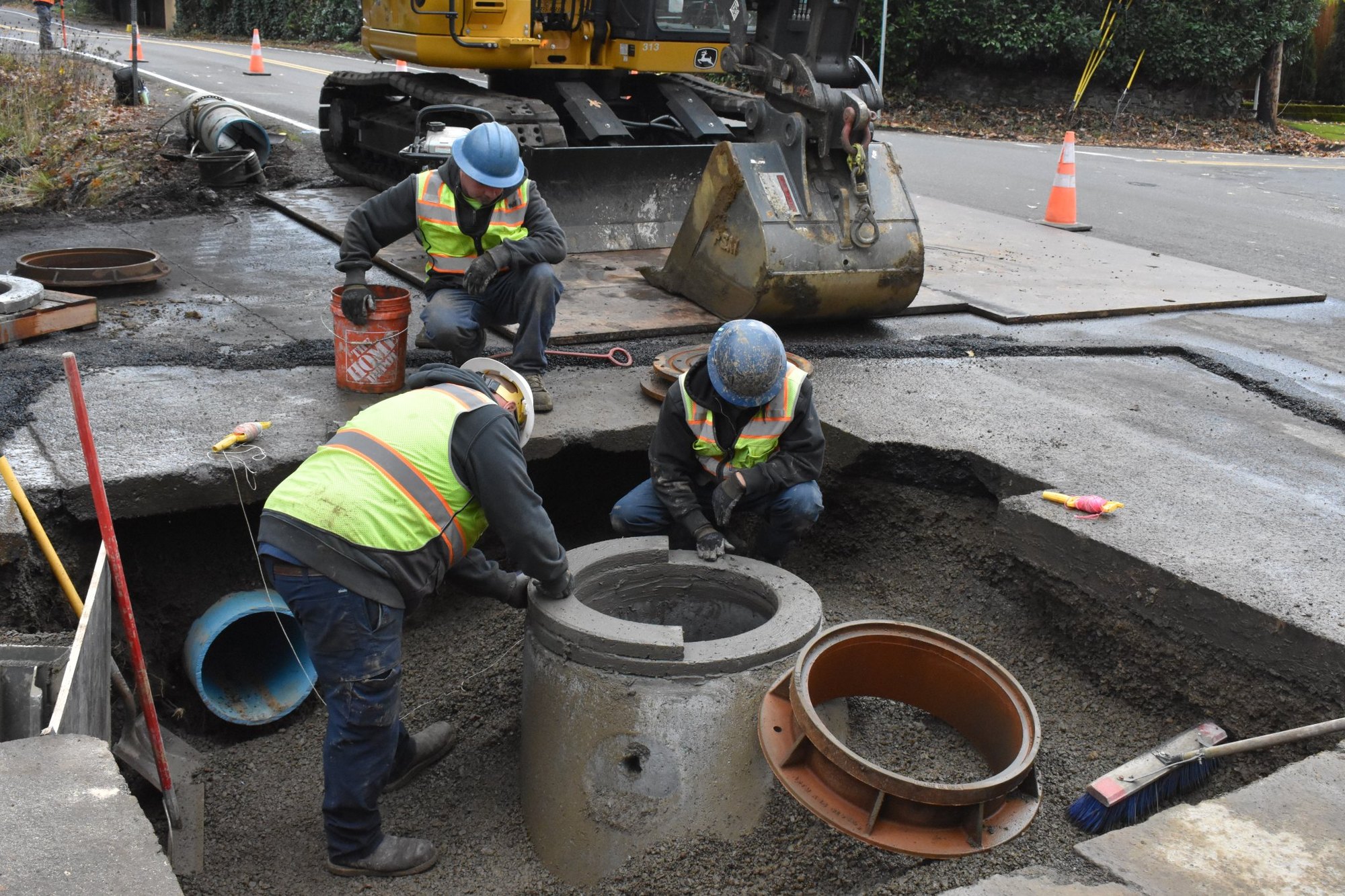
Clean Water Services (CWS) is stepping up sewer pipe repairs across Washington County to stop groundwater and rainwater from seeping into aging underground lines, a problem that can force raw sewage into the environment or back up into homes.
The utility, which serves more than 600,000 homes and businesses in the Tualatin River Watershed, announced the push on Nov. 15. CWS said communities across the watershed may notice more construction in their neighborhoods as the district launches major improvement projects.
North Bethany falls within the West Basin Master Plan, which the CWS Board of Directors adopted on Nov. 4, 2025. That plan covers the conveyance system and the Rock Creek, Hillsboro and Forest Grove water resource recovery facilities, according to CWS planning documents. The plan also serves Hillsboro, Forest Grove, Cornelius, North Plains, Banks, Gaston, Aloha and portions of Beaverton.
What is I&I?
The issue is called Inflow and Infiltration (I&I). Infiltration happens when groundwater seeps into cracked or damaged sewer pipes underground. Inflow happens when surface water from heavy rain or snow enters the pipes from above.
Sanitary sewer pipes are supposed to carry only wastewater from homes and businesses to treatment facilities. When outside water gets in, it increases the volume that treatment plants must handle. In serious cases, the extra water can overwhelm the system, according to a CWS fact sheet. That can force sewage to overflow into waterways or back up through toilets and drains inside homes.
Many of the county's sewer and stormwater pipes are decades old. Some are a century old. CWS said these pipes are deteriorating and susceptible to I&I through cracks, disconnected joints, maintenance holes and other openings. Tree roots pushing through a pipe, for example, can allow groundwater to seep in.
Rates are going up
The infrastructure work comes with higher bills. CWS adopted a 6.4% combined sewer and stormwater rate increase for fiscal year 2026-27, adding an estimated $4.28 per month for the average residential customer in unincorporated Washington County, according to the district's rates FAQ page. About $1.89 of that monthly increase stems from a 21% jump in local sewer rates. CWS said those local rates had not been keeping up with the cost of delivering services.
The district does not receive property tax dollars. It is funded entirely by ratepayers. CWS said its rate increases have averaged less than 4% per year over the past decade.
Looking ahead, CWS projects monthly increases of $4.79 in fiscal year 2028, $5.42 in FY 2029, $6.05 in FY 2030 and $6.83 in FY 2031. The board approves rates one year at a time, and CWS said those projections will be re-evaluated annually.
What homeowners can do
CWS is responsible for public infrastructure, but homeowners play a role too. The district recommends having a professional plumber evaluate private sewer laterals and gutter downspouts to make sure they are properly connected and free of tree root damage.
CWS General Manager Rahim Harji said in a September 2026 district post that "the water workforce will only become more essential as our infrastructure ages and a rapidly changing climate increasingly impacts our water resources."
The Washington County Board of Commissioners serves as the CWS Board of Directors. Regular meetings are held the second Tuesday of each month at 9 a.m. and the fourth Tuesday at 5:30 p.m. at the Charles D. Cameron Public Services Building, 155 North First Ave. in Hillsboro. Residents can track active projects at CWS's online engagement portal at engage.cleanwaterservices.org.