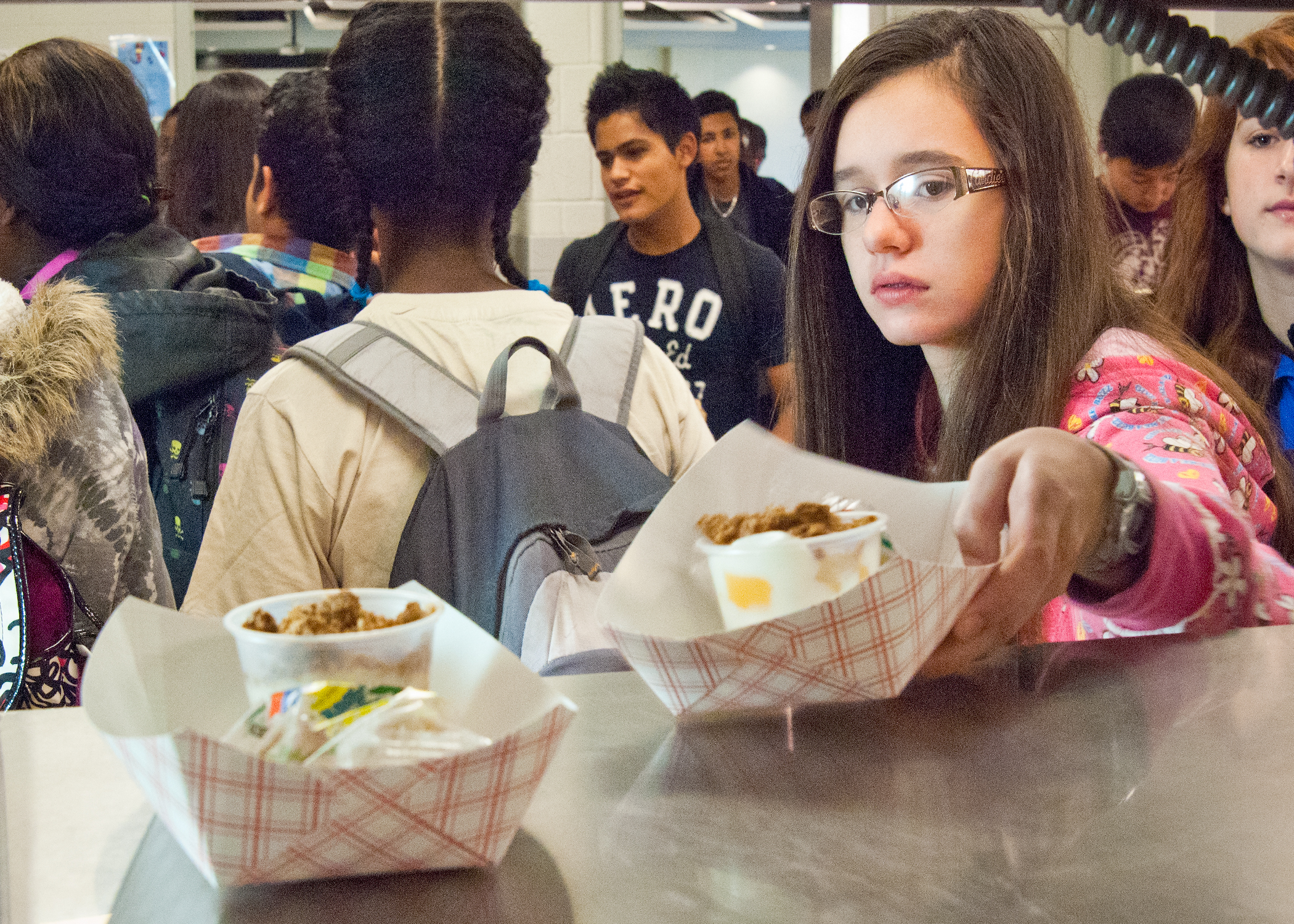
Free breakfast and lunch at all 52 Beaverton School District schools could be in jeopardy as federal cuts to food assistance erode the eligibility formula that funds them.
The district offers universal free meals through the Community Eligibility Provision (CEP), a U.S. Department of Agriculture program that covers meal costs when enough students participate in assistance programs like the Supplemental Nutrition Assistance Program, known as SNAP. But SNAP enrollment is falling fast in Oregon and nationwide, and school nutrition experts warn the drop could eventually push districts below the threshold needed to keep meals free.
Since July 2025, when the One Big Beautiful Bill Act became law, about 62,000 Oregonians have lost SNAP benefits, OPB reported in July 2026. More than 25,000 lost benefits because they did not meet new work requirements. The state is now distributing $13 million less per year in food aid than it did before the law took effect.
Nationally, SNAP participation has fallen by roughly 5 million people since the law's enactment, according to the Center on Budget and Policy Priorities. More than a million of those are children, the center estimated, as reported by OPB.
The CEP requires that at least 25% of a school's or district's students be enrolled in programs like SNAP or Medicaid. When that share reaches 62.5%, the federal government covers the full cost of meals. As families lose SNAP, that percentage drops, and schools receive less federal reimbursement, OPB reported Sept. 3.
Diane Pratt-Heavner, a spokesperson for the School Nutrition Association, told OPB the consequences are already showing up in other states. Dozens of schools nationwide ended universal free meal programs heading into the 2026-27 school year, including districts in San Antonio, Houston and Miami-Dade County.
"Unpaid meal debt becomes an issue not only for the school meal program, but for the school district budget, which has to pay teachers and for textbooks," Pratt-Heavner told OPB.
BSD has not publicly said how close its schools are to the CEP eligibility threshold or whether the SNAP decline has affected its federal reimbursement rate.
The district's nutrition services page confirms all 52 sites are participating in CEP for the 2026-27 school year.
The Center for American Progress estimates a family with two children who loses access to free school meals would spend an additional $1,890 per year on cafeteria meals or more than $2,214 on packed lunches.
BSD is already facing budget pressure. The district projects enrollment will decline by about 600 students per year starting in 2026, and its structural deficit is expected to grow from $20 million to more than $70 million by 2029, according to the district's budget page.
Oregon is not among the nine states that have enacted permanent universal free school meals, OPB reported. That means BSD's free meal program depends entirely on maintaining CEP eligibility.
School nutrition policy experts told OPB that immigrant families may avoid applying for meal assistance even when their children qualify, because applications require personal information such as the last four digits of a Social Security number.
Starting in October, states will be required to cover 75% of SNAP administrative costs, up from 50%, under the same federal law, according to the Center for American Progress. BSD has not announced any changes to its meal program.