Beaverton School District families face a growing question: are local school buildings ready for wildfire smoke?
A new Oregon State University study, first reported by the Oregon Capital Chronicle via the Portland Tribune, found that over 17 years the average number of days U.S. school children breathed unhealthy air increased nearly eightfold. Researchers examined national air quality data from 2006 through 2023. Annual smoke days at public schools rose from 6.8 to 54.4. Childcare centers saw a similar rise, going from 9.4 to 112.2 smoke days per year.
"Our children are collectively experiencing billions of days of smoky air each year," said Molly Kile, an environmental epidemiologist at Oregon State and a lead researcher on the study.
Oregon wildfires burned 2.5 million acres in summer 2026, breaking the previous record of 1.9 million acres set in 2024, according to the Oregon Department of Forestry. Kile said western states experience more smoke overall, and that fine particulate matter blows west to east across hundreds or thousands of miles.
PM2.5 (fine particulate matter found in wildfire smoke) can reach deep into the lungs and enter the bloodstream. It is a known cause of cardiovascular disease and is linked to the onset and worsening of respiratory illness. Wildfires account for almost half of all PM2.5 across the country, according to the study.
Staying indoors isn't enough
Kile said indoor air quality varies depending on how well a building shields occupants from outdoor pollution. Some schools in the study recorded higher indoor PM2.5 levels than nearby outdoor readings on smoke days, she said.
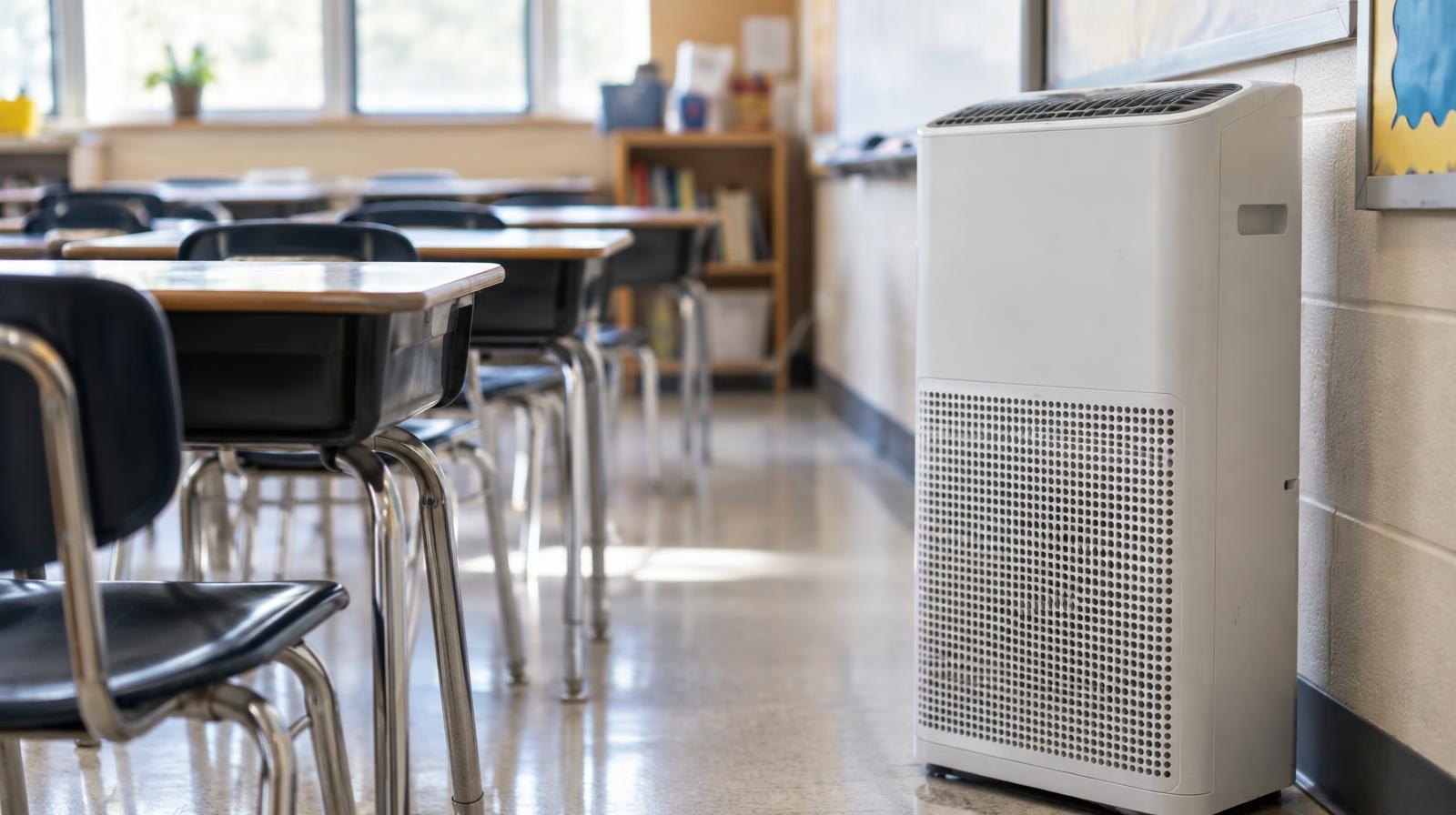
"This is a particularly actionable finding and emphasizes the need for investment in improving indoor air quality in schools through HVAC upgrades, which can be expensive, or portable HEPA filters, which can be a more affordable approach," Kile said.
Stephanie Foster, a program manager at Samaritan Health Services' Research Development Office and the study's corresponding author, said schools and childcare centers are prime targets for improvement because children spend so much time in them. Coordinated preparedness plans, air filtration, indoor air quality monitoring and changes to activities during smoke events could all reduce exposure, Foster said.
What Beaverton schools have done
BSD voters approved a $723 million bond in May 2022 to finance facilities work through 2028. As of early 2024, district records showed BSD had spent $39 million on climate control and air quality improvements since 2020, with HVAC upgrades completed at 21 sites and ventilation improved to five air exchanges per hour in classrooms.
At Aloha High School, a major HVAC overhaul closed the building for summer 2025 construction. That project spans two summers.
The district's records do not specify whether Westview, Sunset or Mountainside high schools are among the 21 upgraded sites. Whether BSD has deployed portable HEPA filters of the kind the OSU researchers recommend is also unclear from available public records.