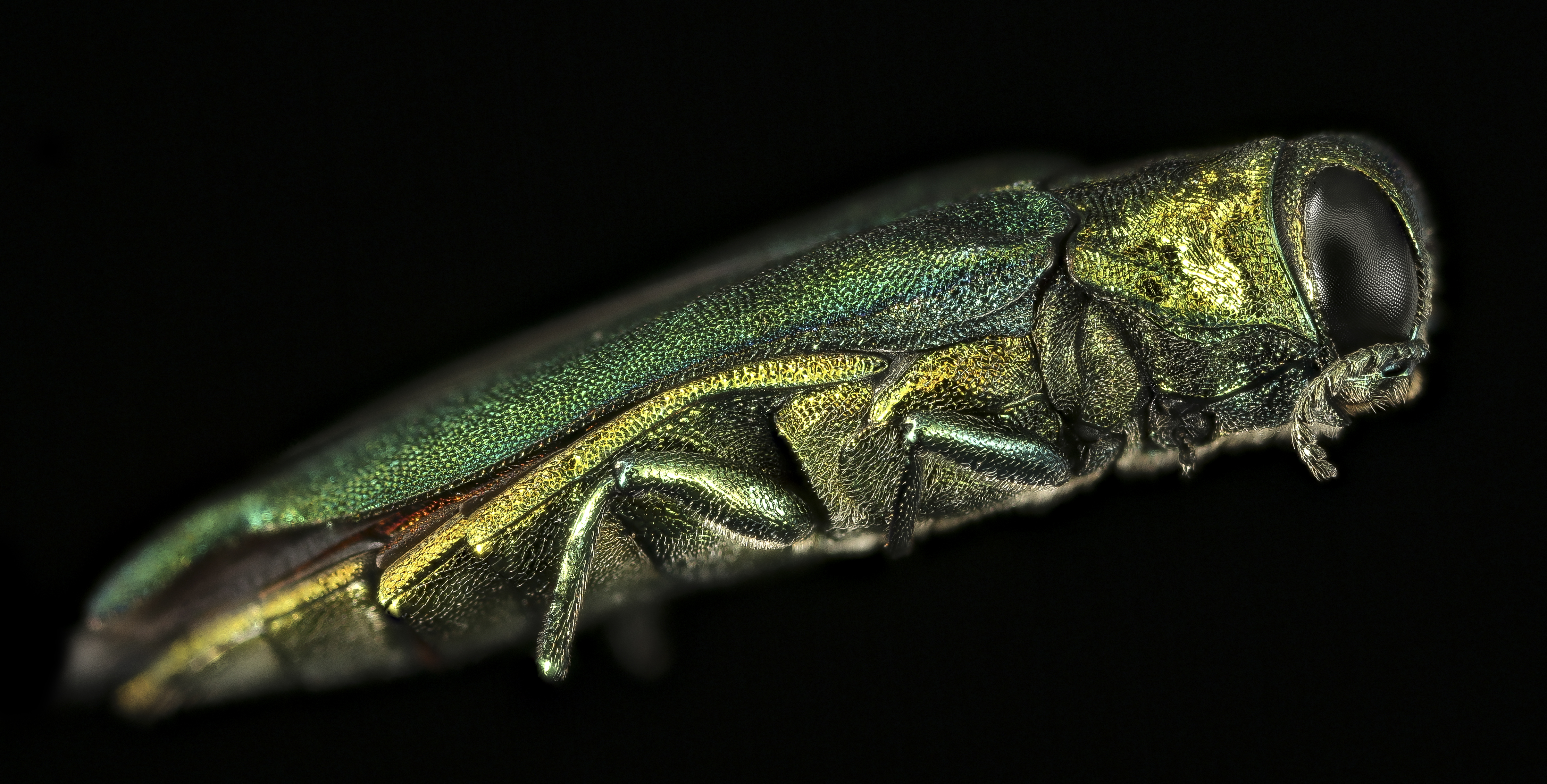
The emerald ash borer has arrived in Rock Creek's backyard.
The Oregon Department of Forestry confirmed Thursday, Aug. 6, that the destructive beetle has been found at Bethany Lake Park, marking the first detection at that site. Traps set this spring and checked in July caught the half-inch metallic green insects, which tunnel into ash trees and kill them within two to five years.
Bethany Lake Park was one of several new Washington County sites announced the same day. The beetle was also detected inside Beaverton city limits for the first time and along the Banks-Vernonia State Trail, the Beaverton Valley Times reported. The Banks-Vernonia finding marks the first time the pest has turned up in an Oregon state park. Officials said there are also likely reports at Jackson Bottom Wetlands Preserve in Hillsboro, though that detection is not yet confirmed.
"The pattern of spread in the eastern U.S. has been that populations at first increase slowly and the rate of natural spread is slow," Cody Holthouse, manager of the Oregon Department of Agriculture's Insect Pest Prevention and Management Program, said in a release. "But within a few years there is a rapid build-up in the population and it spreads in all directions at a faster pace. That's exactly what we're starting to see with these detections."
The spread so far
Oregon became the first West Coast state to report an emerald ash borer infestation in 2022, when the beetle was found at Forest Grove's Joseph Gale Elementary School. In 2023, Washington County was placed under a quarantine prohibiting the movement of ash, olive and white fringetree materials, including hardwood firewood. That quarantine now covers five Oregon counties: Clackamas, Marion, Multnomah, Washington and Yamhill.
Last summer, six new infestation sites were identified in the region. In June 2026, the beetle was confirmed in Tualatin, Newberg and Silverton. The pest can spread up to 11 miles per year naturally, though the average is two to four miles. Human movement of firewood accelerates that dramatically.
What Bethany-area homeowners should do
ODF emerald ash borer specialist Matt Mills said the insecticide used to protect ash trees is injected at the base of the trunk and taken up into the canopy. It works against both adult beetles and larvae. But once the beetles have already infested a tree, pesticides won't save it.
In a June 25 Oregon Invasive Species Council release, ODF support specialist Kat Bethea urged homeowners to identify ash trees on their property, decide which to keep and contact a licensed pesticide applicator to begin treatment before infestation takes hold.
Mills warned in the same release that dead ash trees quickly become brittle and hazardous, making removal more dangerous and expensive than treating a living tree. Trees planted in the wrong spot, such as under power lines, should be removed as time and funds allow.
Signs of infestation include a thinning canopy, dying branches, bark splits, sucker shoots growing from the trunk or base and D-shaped exit holes about 3 millimeters wide.
Beaverton's response
The Beaverton Urban Forestry team has used grant funding to treat 600 of the city's 2,000 inventoried ash street trees, with plans to treat another 600 soon. The city has also planted 60 new street trees with volunteers and Friends of Trees.
Adults are active only June through September, making this the peak window for detection and treatment. Residents can check whether they live near an infested area on ODF's online interactive map and report suspected sightings at oregoninvasiveshotline.org. ODF monitoring across Washington County is ongoing.